2026-11-11 · Tom Brennan
How to Prevent Frozen Pipe Bursts During Worcester Winters
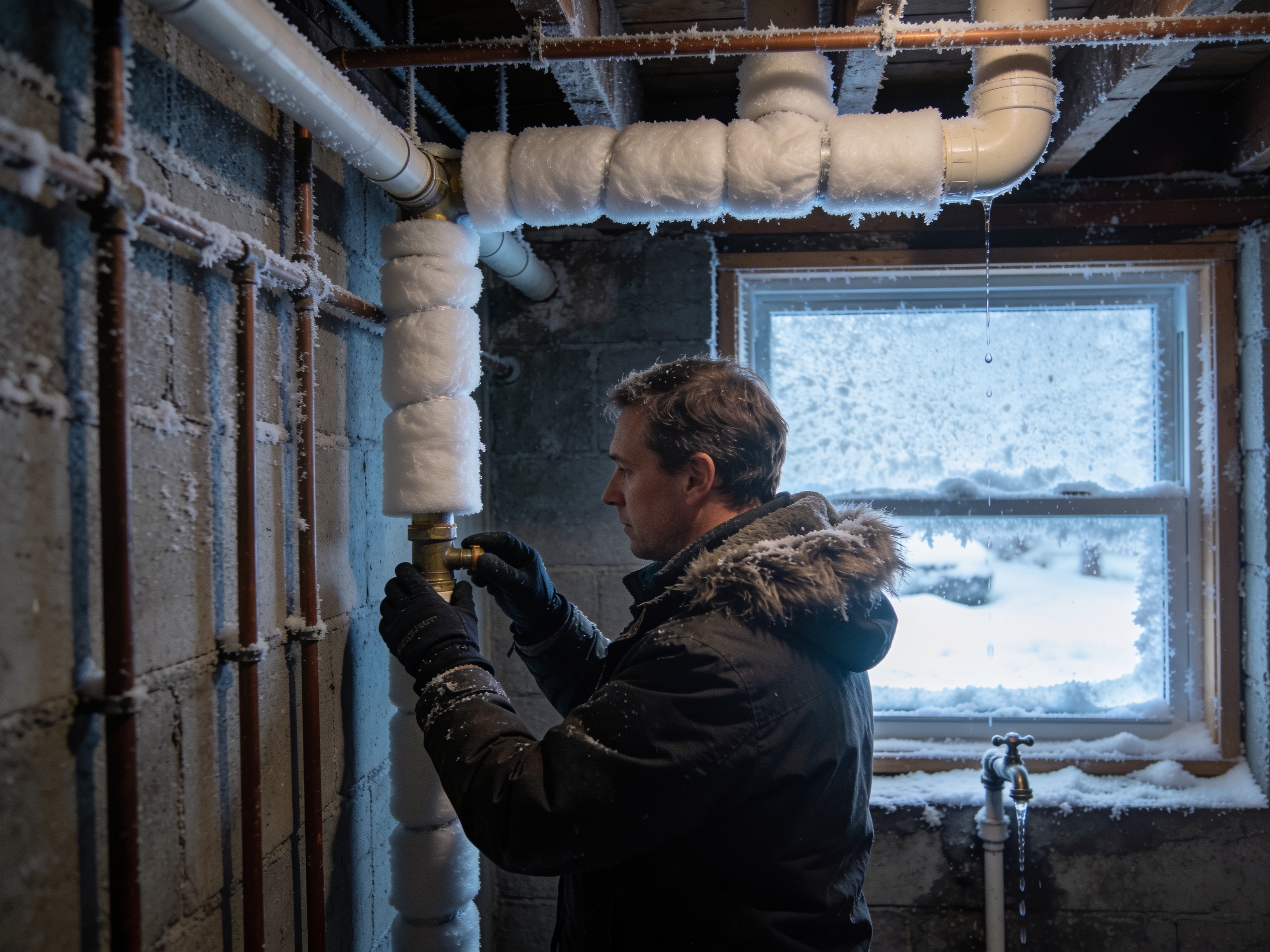
Keeping indoor temperatures above 55°F while insulating pipes in unheated spaces prevents most frozen pipe bursts during Worcester winters. Older homes in Worcester and nearby towns like Auburn and Shrewsbury often have pipes running through exterior walls or unheated attics where cold air penetrates quickly once temperatures drop below freezing.
Worcester Winter Conditions and Pipe Risks
Worcester County experiences frequent nights below 20°F from December through February, with wind chill making unheated areas even colder. Many homes built before 1970 have galvanized or copper lines in exterior walls that lose heat fast when nor'easters bring snow and sustained winds. These conditions turn standing water in pipes to ice within hours if no warm air circulates, expanding and cracking joints near foundations in neighborhoods such as Millbury and Leicester.
Terrain plays a role too. Hills around Worcester create pockets where cold air settles in lower levels of homes, especially in basements with poor insulation. Soil in the area holds moisture into late fall, increasing humidity around foundation pipes and making freeze events more likely during sudden cold snaps.
Locating At-Risk Pipes in Local Homes
Start by checking pipes along north-facing walls and in crawl spaces common to Worcester's older housing stock. Pay attention to supply lines feeding outdoor spigots and washing machines in unheated garages or basements. Homes in Shrewsbury and Grafton often have additions where pipes were rerouted through exterior walls without extra insulation, creating weak points.
Use a flashlight to inspect under sinks and behind water heaters for exposed sections. Feel for drafts around pipe penetrations in the ceiling or floor. Any line that stays below 40°F when the rest of the house is heated needs attention before the first hard freeze.
Step-by-Step Prevention Measures
- Set your thermostat no lower than 55°F even when away, and open cabinet doors under sinks to let warm air reach pipes.
- Wrap exposed pipes with foam insulation sleeves at least 1/2 inch thick, focusing on runs in attics and crawl spaces.
- Disconnect and drain garden hoses before the first freeze, then install insulated covers on outdoor spigots.
- Seal gaps around pipe entries with expanding foam or caulk to block cold air infiltration.
- Consider installing a smart thermostat that alerts you if indoor temperatures drop unexpectedly during travel.
These actions address the specific freeze patterns seen each winter in Worcester and surrounding towns like Holden and West Boylston.
What to Do If a Pipe Freezes Despite Precautions
If you discover a frozen line, open the nearest faucet and apply gentle heat with a hair dryer or heating pad, working from the faucet toward the freeze. Never use an open flame or space heater directly on pipes. Once flow returns, check for leaks and monitor the area for several hours.