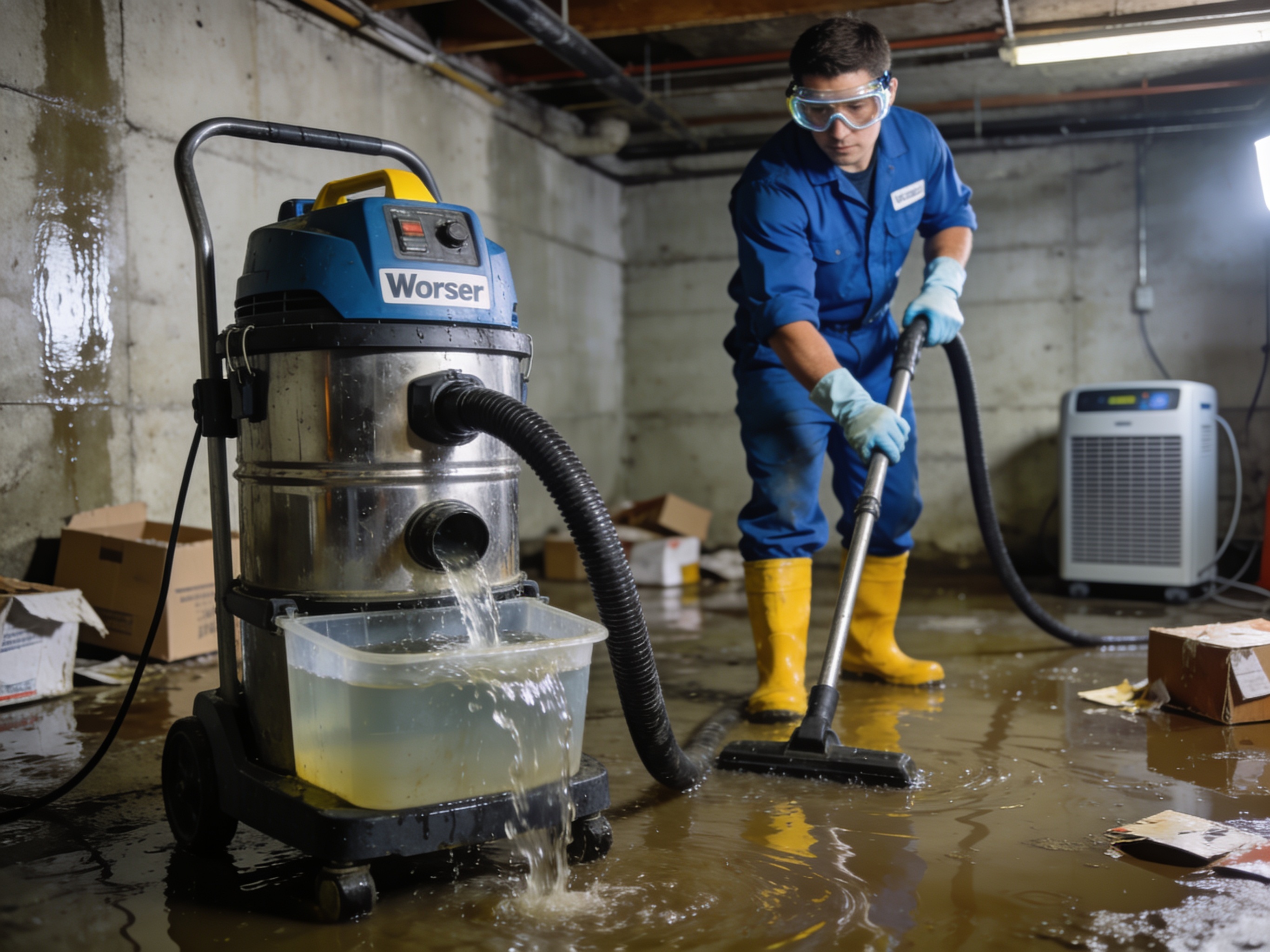
Worcester's older housing stock, especially pre-1950 homes with stone or brick foundations in neighborhoods like Main South and Quinsigamond Village, often channels water along mortar joints and into dirt crawl spaces. Emergency water removal here requires immediate pumping to prevent saturation of those porous materials, followed by targeted extraction under floor joists where standing water hides. Winter freezes along the Blackstone River corridor regularly split galvanized lines, sending sudden volumes into basements that sit below street grade.
Heavy spring rains and summer thunderstorms overwhelm aging storm drains in East Worcester and Vernon Hill, pushing groundwater through foundation cracks faster than gravity drains can handle. Technicians must account for the clay-heavy soils common in Worcester County that hold moisture against slab edges, so extraction includes breaking suction at those points before mold sets in. Commercial properties near the rail yards face additional runoff from paved lots that funnels directly into loading docks and lower levels.
Portable extraction units sized for residential basements are standard because many Worcester streets limit truck access, and power is often lost during storms. After bulk removal, crews check for water trapped behind lath-and-plaster walls typical of triple-deckers, using moisture meters to locate pockets that standard shop vacs miss. Delaying removal even 24 hours in these conditions allows water to wick upward into first-floor subfloors.
Technician insight
In Worcester the thing that catches most people out with Emergency Water Removal is water trapped behind the horsehair plaster in triple-deckers built before 1920. Once it reaches the lath, simple floor pumping leaves the walls wet for weeks, especially on the north sides of buildings where sun never reaches.
Frozen Line in a Whitinsville Triple-Decker
A January freeze split a galvanized supply line on the second floor. Water traveled down interior walls into the first-floor unit and then the basement. Extraction focused on pulling water from behind plaster and under the oak flooring before it reached the electrical panel. The job finished with containment barriers in place before the weekend.
Emergency Water Removal Services We Offer
✓Basement Flood Extraction
High-volume pumping and vacuuming to clear standing water from Worcester basements before it migrates into finished areas or electrical systems.
✓Burst Pipe Water Removal
Targeted extraction along interior walls and under flooring after frozen or corroded lines fail in older Worcester homes.
✓Crawl Space Water Extraction
Removal of groundwater or runoff that collects under older homes in Whitinsville and surrounding Worcester County towns where vapor barriers are absent.
✓Appliance Leak Cleanup
Fast water removal from washing machine, water heater or dishwasher failures that spread across laundry rooms and adjacent living spaces.
✓Storm Drain Backup Removal
Extraction of rainwater and debris pushed into lower levels during heavy downpours common along Worcester's low-lying streets.
Emergency Water Removal Cost in Worceste, MA
| Service | Typical Range | What Affects It |
|---|---|---|
| Basement extraction under 500 sq ft | $350–$650 | Higher when debris or sewage is present |
| Crawl space water removal | $400–$750 | Depends on standing depth and vapor barrier condition |
| Appliance leak extraction | $200–$450 | Lower when limited to hard surfaces |
| After-hours emergency call-out | Not offered | Service available Mon–Fri 8am–6pm, Sat 9am–2pm |
Ranges are typical for Worceste, MA and confirmed with an exact written quote before any work starts.
How it works
- 1
Safety and Access Check
Shut off power and gas where needed, then clear a path for equipment into the affected space.
- 2
Bulk Water Extraction
Deploy submersible pumps and wet vacuums to remove standing water down to the slab or dirt floor.
- 3
Hidden Moisture Location
Use meters to find trapped water behind walls, under cabinets, and in Worcester's typical lath construction.
- 4
Initial Containment
Place air movers and dehumidifiers to begin drying while preventing migration to unaffected rooms.
Pricing
Pricing varies by water volume, access difficulty, and whether power is available at the site.