Worceste homes built before 1950 often feature plaster over lath and balloon framing that lets water travel unseen between floors and into wall cavities. Technicians must open multiple inspection points and use moisture meters on every level because surface drying alone leaves hidden saturation that later fuels mold. Spring snowmelt and heavy nor'easters push groundwater against older foundations, especially on the slopes around Whitinsville where clay soils hold water against basements for days.
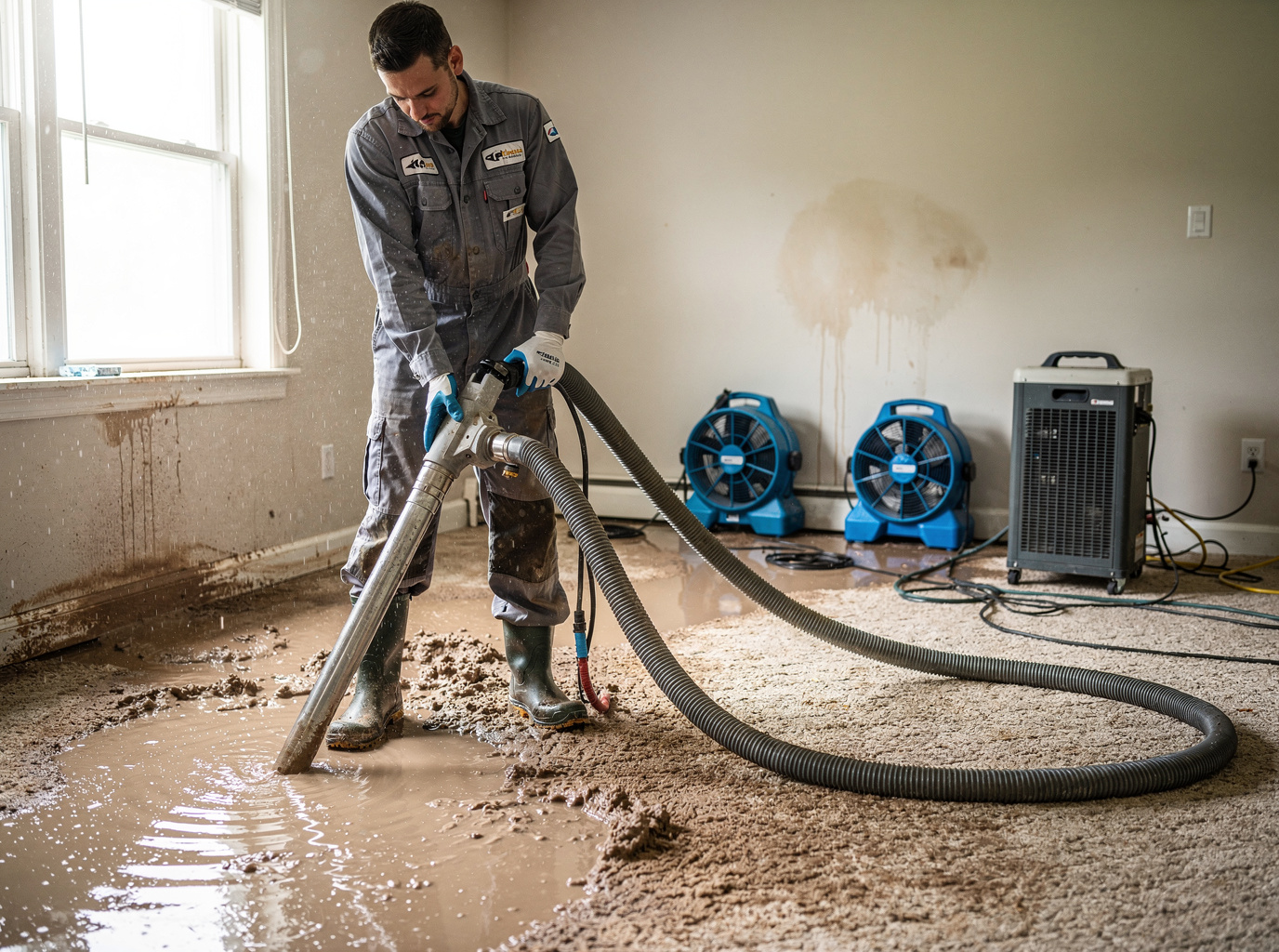
After any flood or burst pipe, the first priority is stopping the source and removing standing water within hours to limit swelling of hardwood floors and warping of subfloors. In Worceste's humid summers, dehumidification must run longer than in drier climates because ambient moisture slows evaporation from brick and concrete. Technicians document every step with photos and moisture logs so insurance adjusters see exactly which materials were removed and why.
Edge cases include sewage backups from combined storm drains common in older Worceste neighborhoods and slow leaks behind tiled showers that rot joists over months. These jobs require full containment, HEPA air scrubbing, and sometimes antimicrobial rinses on porous materials that cannot be fully dried in place. Homeowners who attempt DIY drying with box fans often push moisture deeper into cavities, raising the final scope and cost.
Technician insight
In Worceste, the thing that catches most people out with water damage restoration is how quickly moisture travels through balloon framing in pre-war homes around the city center and Whitinsville. A small leak in an upstairs bath can saturate first-floor plaster and joists days before anyone notices; skipping multiple wall checks always leads to callbacks.
Hidden moisture in a Whitinsville Victorian
A homeowner in Whitinsville called after a second-floor pipe leak dripped through the ceiling. Inspection showed water had traveled down balloon studs into the parlor walls and baseboards. Crews opened inspection holes on both floors, extracted water, and ran drying equipment for five days until readings normalized. The home was returned to the owner with only minor plaster repair needed.
Water Damage Restoration Service Services We Offer
✓Basement Water Extraction
Removes standing water from Worceste basements using submersible pumps and wands before hidden moisture reaches joists and electrical boxes.
✓Structural Drying and Dehumidification
Places commercial air movers and dehumidifiers to pull moisture from plaster, brick, and hardwood in older Worceste homes where humidity lingers.
✓Mold Remediation After Water Damage
Contains and removes mold growth triggered by leaks or flooding in Worceste properties, followed by HEPA cleaning and moisture source correction.
✓Carpet and Pad Removal
Extracts saturated carpet and padding, then treats subfloors to prevent odor and warping in homes around Whitinsville and central Worceste.
✓Content Drying and Cleaning
Moves, dries, and cleans furniture, documents, and belongings on-site or at a secure facility to reduce replacement costs after water events.
Water Damage Restoration Service Cost in Worceste, MA
| Service | Typical Range | What Affects It |
|---|---|---|
| Category 1 water extraction and drying | $800–$2,200 | Clean water from burst supply lines; price rises with square footage and number of rooms. |
| Category 2 or 3 water cleanup | $1,500–$4,500 | Gray or black water from appliances or groundwater; requires more containment and disposal. |
| Mold remediation add-on | $600–$2,000 | Added when hidden growth is found behind walls or in basements common in older Worceste stock. |
| Emergency after-hours response | $150–$300 | Travel and mobilization fee outside Mon–Fri 8am–6pm or Sat 9am–2pm. |
Ranges are typical for Worceste, MA and confirmed with an exact written quote before any work starts.
How it works
- 1
Emergency Assessment
Arrive on site, locate the water source, and map moisture with meters and infrared cameras in Worceste homes.
- 2
Water Removal
Extract standing water with pumps and vacuums, then remove unsalvageable materials to prevent further spread.
- 3
Drying And Monitoring
Set up drying equipment and check moisture readings daily until levels return to normal for the building materials.
- 4
Sanitizing And Restoration
Apply antimicrobials where needed and coordinate repairs to return the property to pre-loss condition.
Pricing
Upfront quotes after inspection; final cost depends on water category, affected square footage, and drying time required.