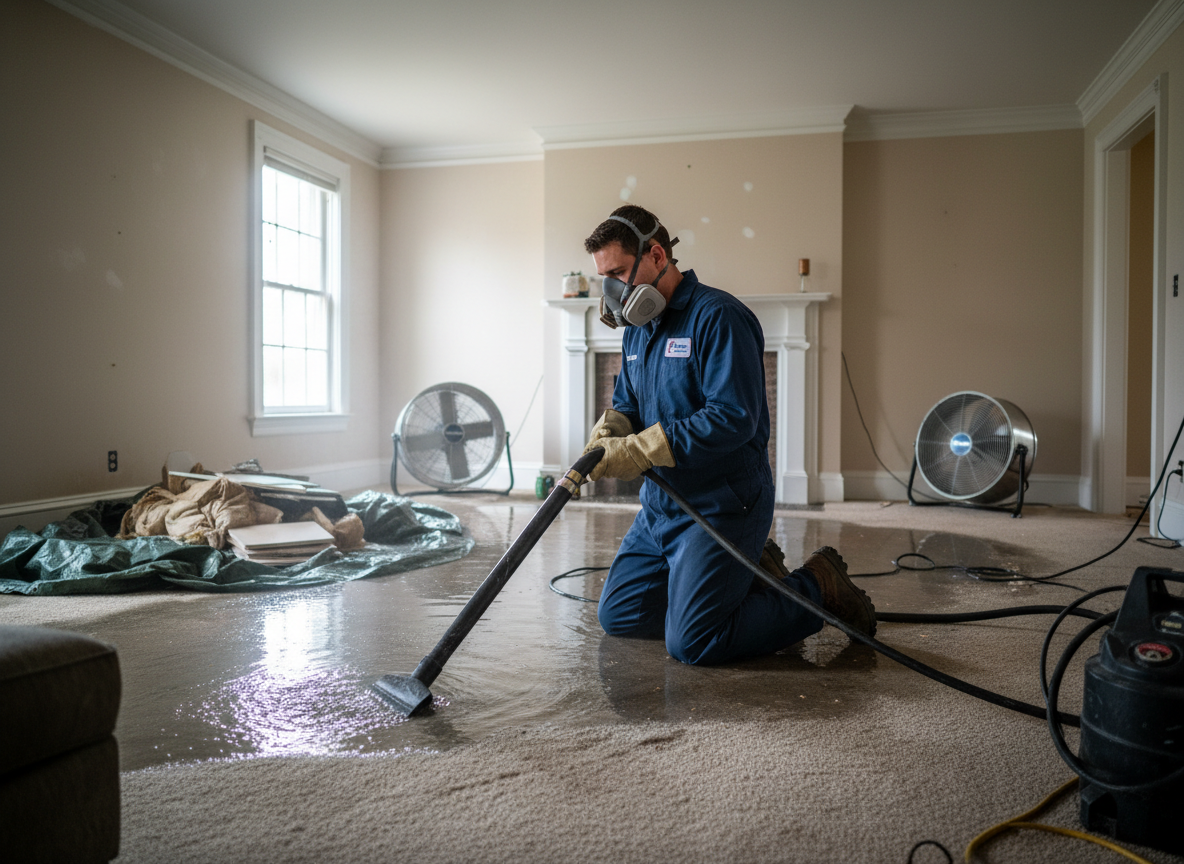
Worcester's older triple-decker homes and early 20th-century housing stock often hide moisture behind plaster and lathe or under wide-plank floors. Once winter temperatures drop, frozen supply lines in unheated basements and crawl spaces burst and send water into finished spaces on multiple levels. Extraction must reach joist bays and behind baseboards before mold sets in, especially in the dense neighborhoods around downtown and Greendale where homes sit close together with shared foundations.
Heavy spring rains and occasional nor'easters push water against the sloping terrain near Lake Quinsigamond and the Blackstone River corridor. Sump pumps in Auburn and Shrewsbury basements fail during power outages, allowing groundwater to saturate concrete slabs that were never designed with modern vapor barriers. Technicians check for hidden saturation in subfloor insulation and behind kitchen cabinet kick plates, because surface drying alone leaves enough moisture to warp hardwood in the humid weeks that follow.
Electrical systems in pre-1970 Worcester homes frequently include knob-and-tube wiring that cannot tolerate prolonged moisture. Any restoration plan must coordinate with licensed electricians before drying equipment is placed, and technicians document affected circuits so homeowners can show insurance adjusters exactly which lines were impacted.
Technician insight
In Worceste the thing that catches most people out with water damage restoration is knob-and-tube wiring in the 1920s triple-deckers around Vernon Hill and Main South. Once water reaches those circuits the drying plan changes because you cannot simply place equipment without an electrician first isolating the lines, and that extra coordination often adds a day before dehumidifiers can run full time.
Burst pipe in a Greendale triple-decker
A supply line froze and split on the second floor, sending water into the first-floor ceiling and basement. Meters showed saturation in plaster walls and under the oak floor. Extraction and targeted drying prevented mold in the shared wall with the neighboring unit; floors were saved without full replacement.
Water Damage Restoration Services We Offer
✓Emergency Water Extraction
Removes standing water from basements and first floors in Worcester triple-deckers before it migrates into wall cavities.
✓Structural Drying and Dehumidification
Uses commercial air movers and dehumidifiers sized for older plaster walls and wide-plank flooring common in Greendale and Vernon Hill homes.
✓Basement Waterproofing Assessment
Identifies failed sump systems and grading issues around properties near the Blackstone River that allow repeated groundwater intrusion.
✓Mold Remediation After Water Damage
Treats hidden growth behind baseboards and under cabinets once moisture from pipe bursts or storm flooding has been removed.
✓Hardwood Floor Restoration
Dries and repairs cupping or buckling in original oak floors found in pre-war homes throughout Worcester and Shrewsbury.
Water Damage Restoration Cost in Worceste, MA
| Service | Typical Range | What Affects It |
|---|---|---|
| Emergency extraction visit | $350–$750 | Depends on volume of water and number of stories |
| Full structural drying package | $800–$2,200 | Includes equipment and daily monitoring for typical basement plus first floor |
| Hardwood floor drying and repair | $1,200–$3,500 | Varies with square footage and whether cupping requires board replacement |
| Mold treatment after water event | $600–$1,800 | Based on square footage behind walls and in cavities |
Ranges are typical for Worceste, MA and confirmed with an exact written quote before any work starts.
How it works
- 1
On-Site Assessment
Technician inspects all affected levels, checks for hidden moisture with meters, and notes electrical concerns typical in older Worcester homes.
- 2
Water Removal
Pumps and extraction tools clear standing water from basements and living spaces before it reaches neighboring units in dense triple-decker blocks.
- 3
Drying And Monitoring
Equipment runs until moisture readings return to normal; daily checks prevent over-drying that can crack plaster in historic finishes.
- 4
Restoration And Repairs
Replace damaged drywall, refinish floors, and coordinate with electricians on any wiring affected by the water event.
Pricing
Pricing varies by extent of hidden moisture and number of levels affected; most jobs begin with an on-site assessment.